Ann Beatty: Education beyond the 3 Rs
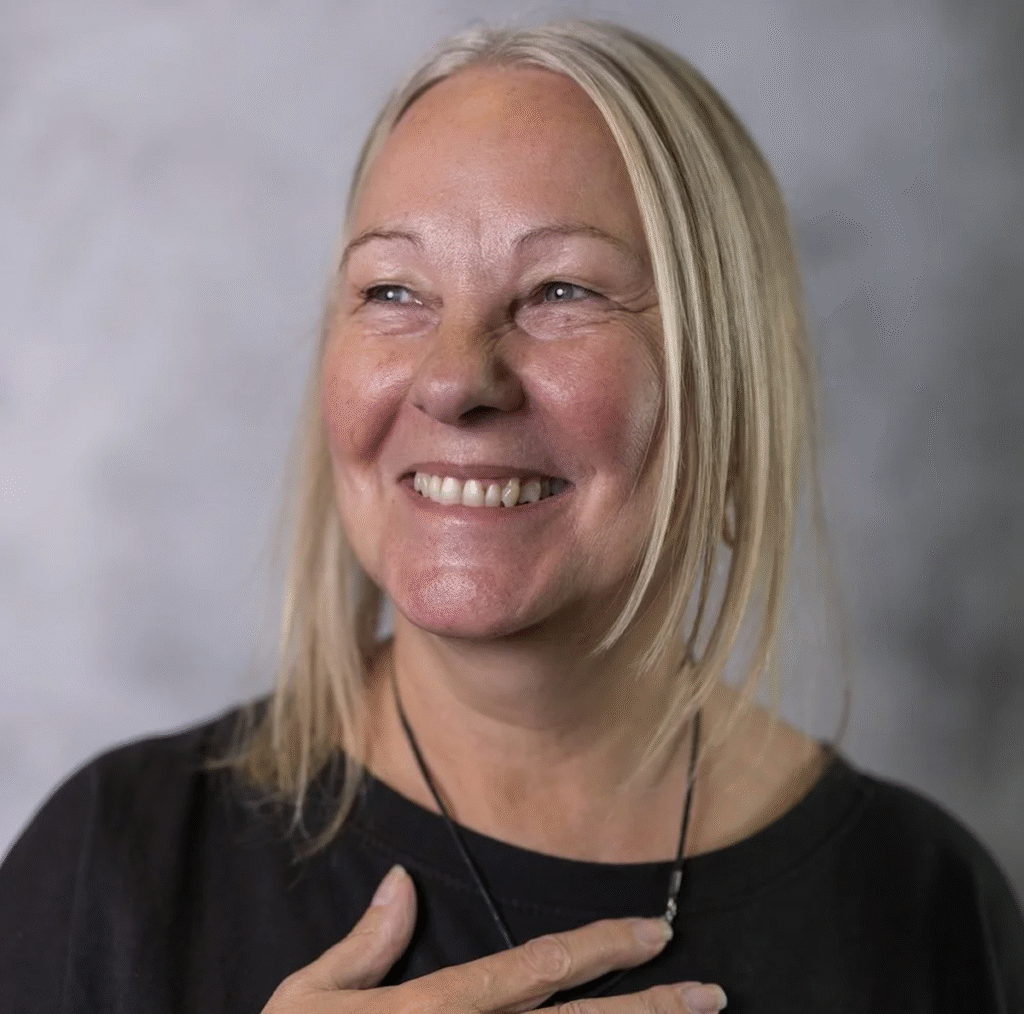
The impact of poverty on access to education cannot be underestimated. No one can attest to that better than Ann Beatty, who left school at 15 to help support her family, and gave up her dream of becoming a lawyer.
“When I was growing up, we were economically poor, so it wasn’t possible for me to go for higher education,” says Ann, recalling the retail jobs she took in 1980s Britain amid soaring inflation and unemployment. It was only in her 30s that she had the opportunity to study a Management Studies diploma at the University of Westminster.
Trained as a life coach who worked her way into leadership over 22 years, Ann believes she didn’t need a certificate, an MA or a PhD to move forward. Her knowledge was honed on the job and her values polished through the “university of life”, until she found her calling to help break the education injustice cycle.
The biggest influences that made her realise education mattered were her father and her time in Sierra Leone. “When I was a small girl I had to teach my dad to read and write. He was illiterate and always very ashamed of that. I loved reading more than anything, it was my escape, and I was struck by how awful it was that my dad couldn’t go to school.” In Sierra Leone, she adds, “I realised the only way girls and boys can have choices in life is to be educated.”
Now in her late 50s, Ann is Chief Executive of The Steve Sinnott Foundation and UNESCO ASPnet Coordinator UK. “Education injustice is a critical global issue, affecting millions of children and adults by denying them the right to quality education, perpetuating poverty, inequality and social division,” she says.
Everyone has the right to education. It shall be free, at least in the elementary and fundamental stages. And yet…
There is cause for alarm: 250 million children globally are out of school, an increase of 6 million since 2021, and 122 million of them are girls and young women. In Sierra Leone, only 8% of third-grade children can read a simple text. Globally, 119 million girls have never attended school, disparities driven by poverty, conflict, disability and gender bias. The Covid-19 pandemic made it worse, pushing more than 700 million people into poverty and costing more than a billion children a year of school.
Complex issue
“Education for all is not just a moral imperative but a catalyst for economic development, social cohesion, gender equality and global peace,” says Ann. But there is no one-size-fits-all solution. She distinguishes inequality, the gaps in opportunity and outcome between privileged and disadvantaged groups, from inequity, the unequal distribution of resources and opportunities based on factors like income, race, gender, geography or disability.
Systemic inequality is the root cause, she argues, driven by socioeconomic, racial and geographical disparities and biases in policy and teaching. Solving it requires coordinated effort across education systems, communities and governments, equitable funding, inclusive policies and curricula, teacher training, and the dismantling of social and cultural biases.
Disentangling ropes of injustice
For Ann, equity is the more pressing issue because it addresses the root causes. “The work we are doing at The Steve Sinnott Foundation is to ensure that everyone has equitable access to education as it is a basic human right. Supporting educators on the ground to identify the learning needs of their students is essential.” The foundation has developed Learning Resource Centres and Digital Classrooms in rural areas where teachers lack internet access, and runs a ‘Positive Periods and Preventing Gender Based Violence’ initiative to keep girls in school.
A member of Women of the World since 2020, introduced by her fellow alumna coach Julie Rees, Ann loves “the way the network champions each other’s achievements.” Her passion for levelling the field is palpable: “Girls are hugely disadvantaged versus boys when families face the hard decision of who gets an education first, or even at all. The long-term benefits of educating girls are well-documented: improved family health, delayed marriages, and enhanced economic development.”
The early years of struggle and shame may be in the past for this secondary-school dropout, but the flames that fanned her purpose still blaze. She counts her family, her daughter and two grandchildren, as her most important achievement. “I want to leave a legacy for the future that sees people taking control of their own destiny.”