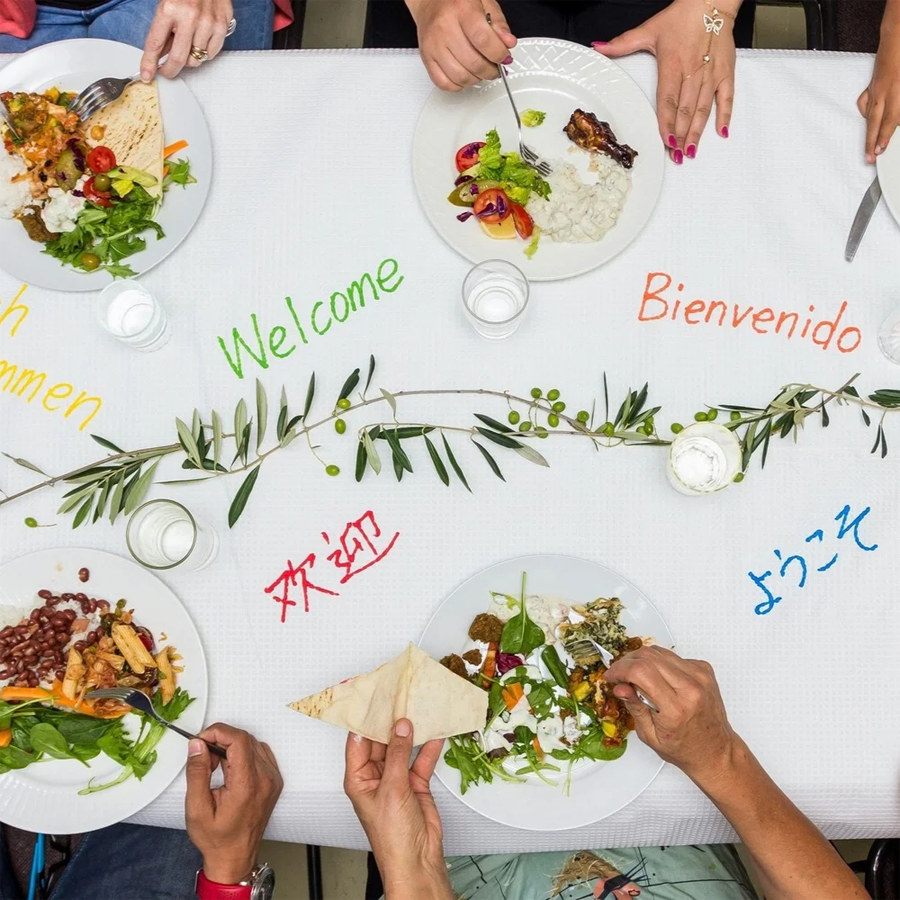
Embracing multiculturalism in supervisory relationships
Many of us navigate multicultural contexts in our personal lives. I often joke that I don't need to step outside my house to experience multicultural clashes, I was born in the Philippines, but my children are third-culture kids, born in Belgium, raised in England, with Filipino parents.
At first glance it might seem enlightened to view people purely as individuals, independent of their cultural backgrounds. We should absolutely approach each person with the intention of getting to know them personally. And yet we all belong, in some way, to the contexts that have shaped us, and even with the best of intentions, it is easy to misjudge others through our own cultural lens.
Cultural patterns shape our perceptions (what we see), cognitions (what we think), and actions (what we do). They are like the water in which we swim: we don't necessarily notice they are there. We can invite ourselves to examine our working relationships through a multifaceted lens, with values of curiosity, creativity and care.
We all belong in some way to the contexts that have shaped us, and even with the best of intentions, it is easy to misjudge others through our own cultural lens.
Erin Meyer's 2014 book The Culture Map offers eight scales representing common gaps in how we engage with each other. Here are the eight, and how they can help us navigate multicultural relationships:
The eight scales of the Culture Map
Communicating, low-context cultures say exactly what they mean; high-context communication is nuanced and indirect. Notice which assumptions you carry into a conversation. Evaluating, some cultures give negative feedback frankly, others soften it; make sure your feedback lands as helpful, not destructive. Persuading, are you 'principles-first' or 'application-first'? Knowing this helps you listen with more patience.
Leading, cultures differ in the deference they show authority, shown in small signals like names, dress or who speaks first. Deciding, decisions may be made by consensus or top-down; find a shared route so quick individual decisions aren't read as a snub. Trusting, trust can be cognitive (built on reliability and competence) or affective (built on emotional connection); consider how much self-exposure you're comfortable with.
Disagreeing, some see open disagreement as healthy, others as harmful; find ways for both sides to feel heard. Scheduling, some follow strict timetables, others treat them as guidelines; an unconsidered mismatch about time is a real source of tension, so discuss it early and often.
Of course, no-one is their culture. But thinking about how these eight areas underpin our assumptions of 'normal' can significantly enhance our effectiveness in multicultural interactions. By acknowledging the interplay between cultural and individual differences, we can improve our relationship-building, with our teams, our researchers, and in all our collaborations.